The new age of learning.
The learning platform for schools and tutors. Courses, practice, grading, protected video and an AI that answers only from your material, each one a module you choose.
In French and English. Built in Montréal.
Use all of Lectur, or only the parts you need.
Configurable at every level, from the whole organization down to a single course.
Upload your material and get a course you can edit.
- Five guided steps from your files to a finished course
- Chapters and topics proposed from your documents and recordings
Interactive step-by-step lessons, built around your material.
- Ten block types, including knowledge checks, code and tabs
- Describe a lesson, approve the outline, review the draft
Practice that adapts to each student, with feedback on every answer.
- Five ways to practice, from Smart mix to Reviews due
- Eight question types, from multiple choice to worked calculations
Recordings and live classes, all protected.
- Captions, transcript and chapter marks on every recording
- Watch tasks complete from what a student has really watched

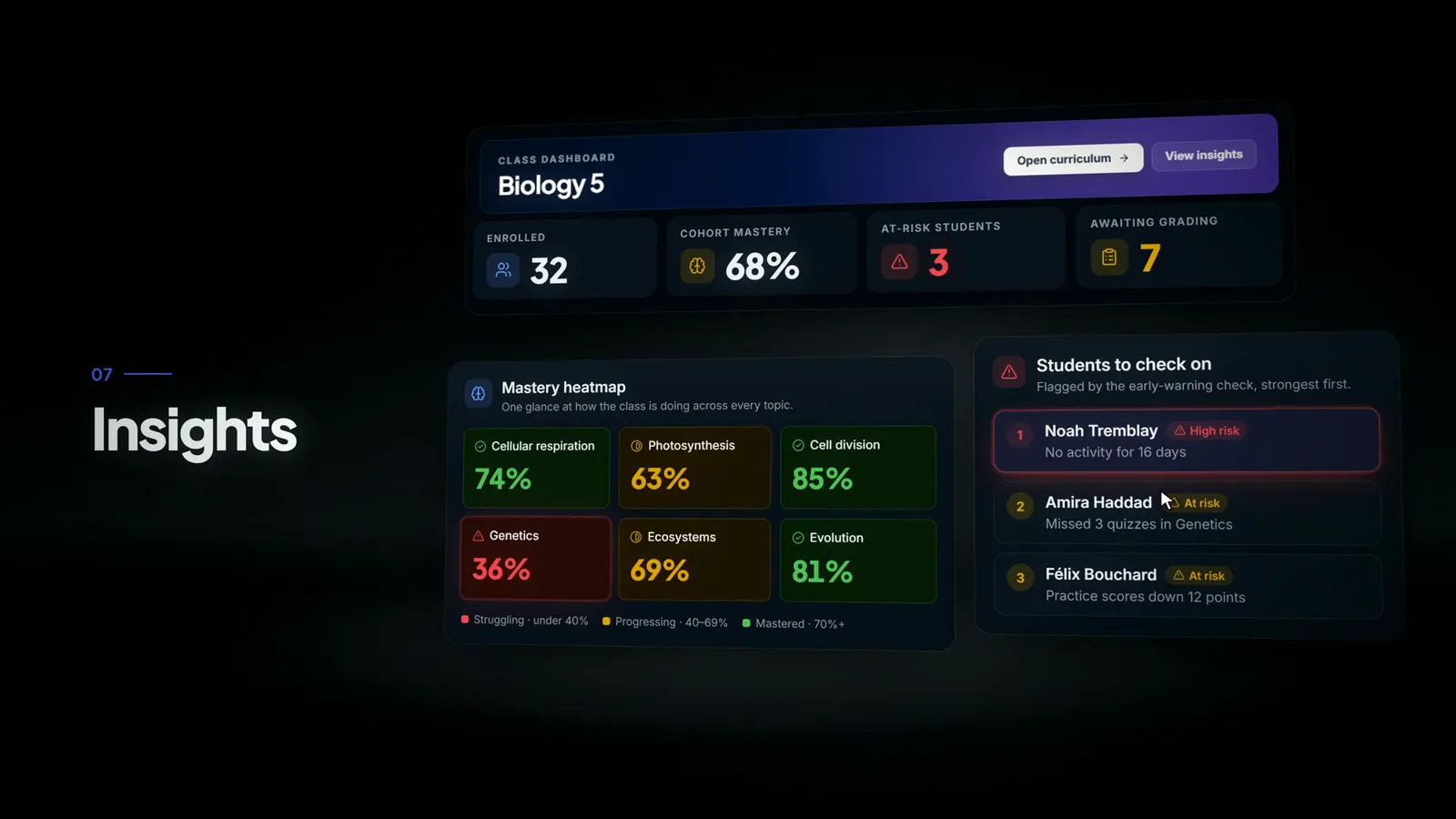
What every classroom needs. Connected on one platform.
Today these live in separate tools, and the full picture of a student only appears once the grades are in.
Responsible AI. A tutor that answers from the teacher's material, with every conversation in the teacher's view.
Engaged learning. Quick feedback, visible progress and friendly competition, so students come back to practice on their own.
Learning intelligence. One profile that follows each student through every class and shows who needs help in time.
Three overlapping circles: responsible AI, engaged learning and learning intelligence. Lectur sits where all three meet.
AI that works for the school, not around it.
Students and teachers already use AI, in tools the school never chose. Lectur brings it into the school's own system.
Where do your answers come from?
Only from the teacher's course material.
Protect the courses you've built.
Shared logins, screen recordings and resold copies cost tutors and schools real money. Every recording and live class on Lectur is encrypted, tied to the person watching it and traceable back to them.
How Lectur protects your videosBring a recording to your walkthrough
Why educators choose Lectur.
Hands down the best platform I have used. For any professor/tutor or educator seeing this, try a demo with the team. You will see how great the platform is, and the team behind it.
 Matthew M.Tutoring business owner
How we handle student data.
Student records stored in Québec
Student work never used to train AI
Privacy impact assessment included
Do we have to adopt everything at once?
No. Each feature is a module. Start with the ones you need and switch on more later, for the whole organization or for a single course.
Can we start with a pilot?
Yes. A pilot runs in a few classrooms alongside the tools you already use, with its scope agreed with you. More can move over once your teachers have tried it.
Can we bring our courses over from Moodle or Google Classroom?
Yes. Upload a Moodle course backup and Lectur imports its files, sections, pages and quiz questions, with a preview before anything is created. Assignments and forums are not imported. From Google Classroom, Lectur imports the materials teachers posted: Drive files and links.
Can we switch AI off entirely?
Yes. Each AI function has its own switch for the whole organization, and student AI help stays off until a teacher turns it on for a course or a piece of work.
Who can read a student's conversations with the AI?
The teachers of that course. Students are told so before they start, and each time a teacher opens a conversation it is recorded.
Can a student still record a video?
We make it difficult and traceable, not impossible. Playback is encrypted, the viewer's email is shown on the picture, devices and simultaneous streams are capped, and every session is logged. Nothing can stop someone pointing a camera at a screen.
Is it fully bilingual?
Yes. Every screen is in English and French, and each person chooses their own language. Your course material stays in the language you write it in.
How do we get started, and what does it cost?
Book a walkthrough. Bring one chapter or one recording and we set it up with you live. The price depends on the modules you switch on, so we give it to you in that conversation.
Ready to see it on your own material?
Book a walkthrough, or start with a pilot in a few classrooms.
- We set up your chapter or recording live
- We reply within two business days
- No commitment
Prefer email? Write to us at info@lectur.ca
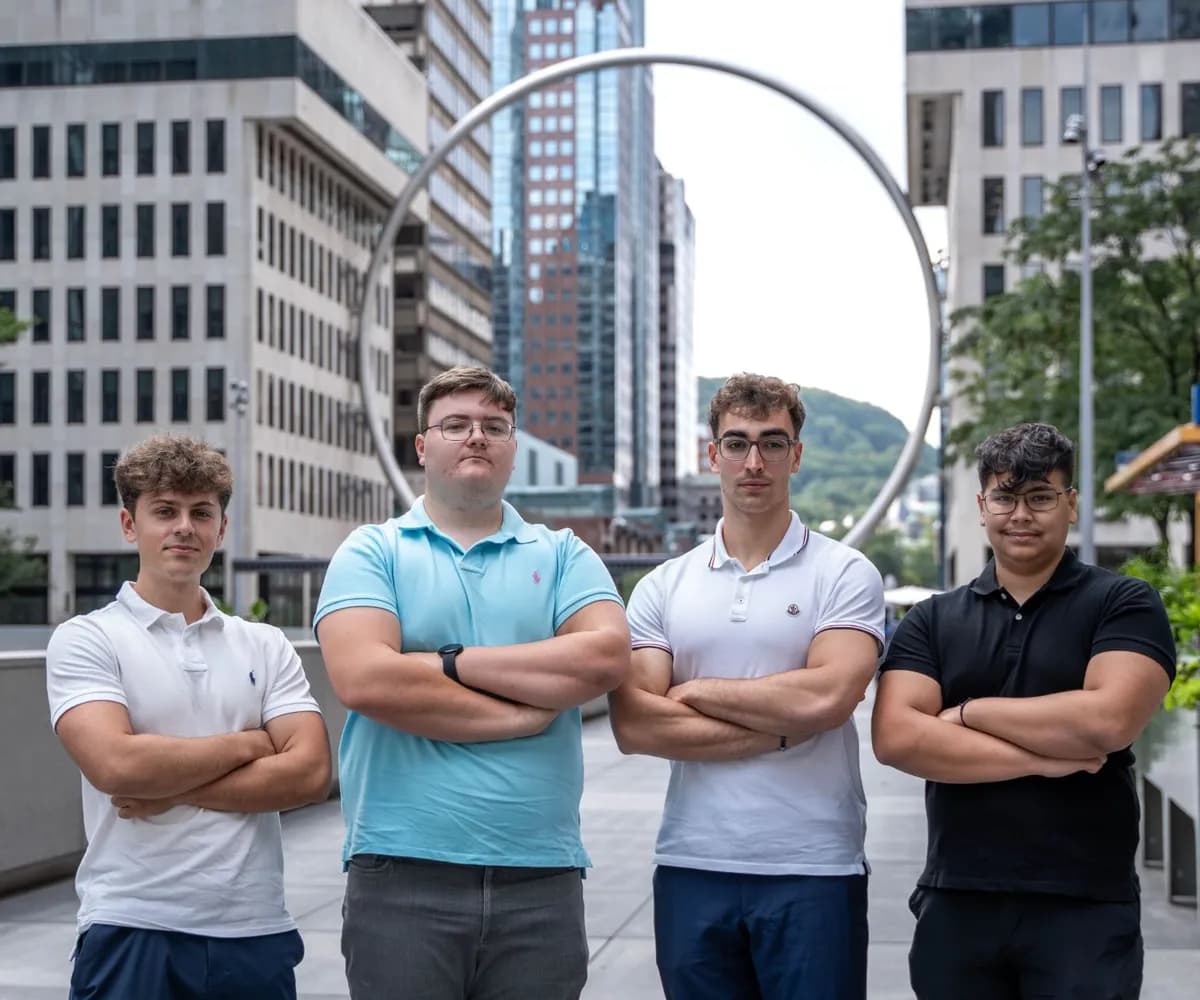
We built Lectur as students, to study for our own midterm.
Now it's a full platform for schools and tutors.
Alexandre, Killian, Joseph and Michael, the team behind Lectur